Tag Archives: red worms

Worm farming. Fun for the whole family.

27 May
 Thanks to Bryan in San Antonio for keeping us posted with all the cool worm composting projects he and his family have going.  
From Bryan:
     I wanted to up date you on how things are going with my worms. The worm tube in my planter seems to be functioning although managing the moisture level needs a bit more attention then I had expected. The high watering needs of the plants dictates that no extra moisture can be added to the tube, at lest for now. Like you said, you have to experiment. As you can see in the picture I had sent you earlier, I had placed a piece of panty hose over the top to keep out flies and other insects. A small number of gnats and ants have managed to get in. The worms in the tube are thriving and multiplying so that’s a good sign. Taking your advice of dividing the worms has helped to continue their rate of reproduction so much in that we have started our third bin two days ago, and probably have enough to start two more. We are all having a fun time of it.
    Soon after starting the first bin I decided to place two worms in a potted pineapple head that I had started. The soil in the pot had become hard and I wanted to see if adding some worms would help, and also if the worms would survive. After a little over a month, the soil is soft and the plants growth has accelerated and the new leafs look great. As of yesterday, we have started brewing worm tea in the typical fashion, 5 gal bucket, aquarium pump and aeration stones and molasses.
  The collecting of coffee grounds from Starbucks has begun, so far I have filled a new 30 gal trash can that I purchased at Wal Mart for around $10.00  about half way. We are also saving our egg shells as well as collecting them from a local bakery.  We use a blender, small food processor, and a mortar to grind them to a fine powder allowing for almost instant availability to the worms. I guess I’ve crossed over the sanity line somewhere.   I do have one question you might be able to answer?  Question* If compost worms i.e. red wigglers were thriving in a plant, flower or vegetable bed would they at some point start eating the roots of the plants?
     Looking forward to hearing from you soon your friend.
                                                                                           BRIAN
Wow.  You are a worm farming machine.  That is outstanding work.
 
I have some worms in some potted plants, as well.  There is a chance they could eat some of the roots.  Just keep adding organic matter so the worms will have plenty to eat.  Keep an eye on the plants health, and thin out the worms from time to time.  I think that kept in check the plants will benefit more from the worm castings than harm can be done.
Thanks for the update,
Kyle

Easy DIY In ground Worm Composting Bin

21 May

With a few minutes and fewer tools you can set up your own red worm composting system in any raised bed.

Materials:

Tin snips or box cutter

Plastic planter or bucket

Shovel or other digging tool

Stone or cover for the in ground bed

Worms

Find an old plastic planter and cut the bottom out.

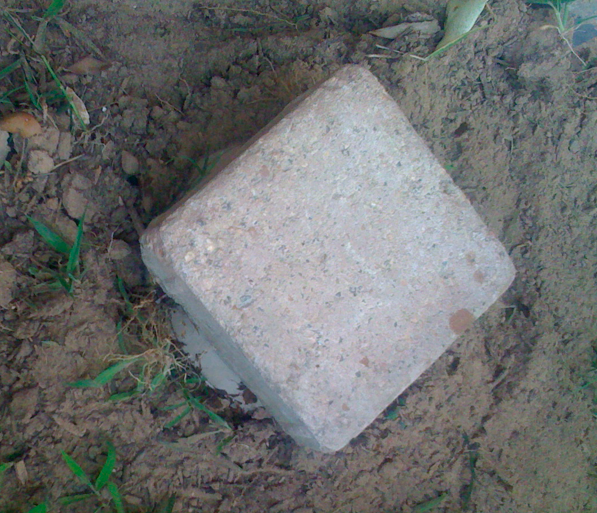
Find a well drained spot that is protected from afternoon direct sun.  Dig a small hole big enough to bury the upside down container.  Add some shredded paper products and some compost.  Moisten your mix and add worms.  Cover w/ a paver or stone to keep out critters, and protect from elements.

Depending on the amount of worms, a handful of kitchen scraps every week or so will be plenty to start.  As your worms grow and reproduce they will require more frequent feedings.  Do not over feed.  Be patient and when the food is processed by the worms, add a few more kitchen scraps.  Keep an eye on moisture.  If kept out of direct sunlight, the food scraps will usually provide enough moisture for your worms.  Worms like it wet because they breathe through their skin, but will drown in standing water.

Red Worms vs. Nightcrawlers for Composting. What’s the Difference?

15 May

Red Worms (Eisenia fetida)European Nightcrawlers (Eisenia hortensis), and African Nightcrawlers (Eudrillus eugeniae), are all excellent composters.  These worms vary in size, w/ Red Worms being the smallest and possibly the least picky.  Red Worms ease of care and ability to handle a wide range of temperatures make them a popular composting worm.

European and African Nightcrawlers are larger worms.  European Nightcrawlers are popular w/ fisherman, due to size.  You’ll find their larger cousin (Canadian Nightcrawler) in bait shops, as well.  European Nightcrawlers can be used for composting, but thought to be less efficient than Red Wigglers or African Nightcrawlers.

African Nightcrawlers are a tropical worm that thrive in warmer climates, need to be kept in temperatures above 70F and will start to die off at 60F.  They are the choice for many commercial worm casting producers that have access to climate controlled facilities.  All three species or varieties can be prolific in the right conditions, and make excellent composting worms.

DIY Worm Trough

28 Apr

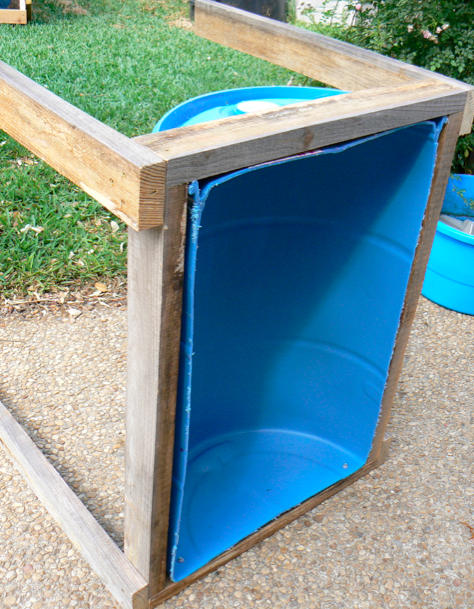
I had been thinking of building a feed trough style worm bed for some time.  I found some plastic 55 gallon drums on Craigslist.  My dad had some pine 2X4s cut from his saw mill, and we were in business.  We began by cutting the 55 gallon plastic drums in half w/ a skill saw.

Materials: (2X4s, plastic 55 gallon drums, 3 inch wood screws, roofing screws, Thompson’s water seal)

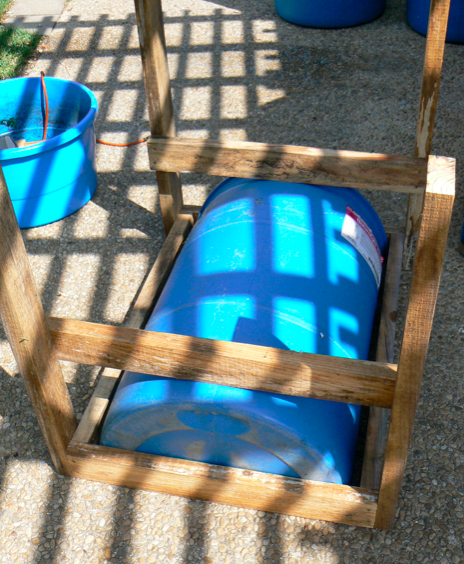
Next we cut the 2X4s to border the open 1/2 end of the drum.  We used 3″ screws to piece the wood together, and galvanized roofing screws to secure the barrel to frame.  The height off the ground, we sized to about waist high for ease of use and for clearance underneath.
We had enough time and materials to build 3 bins.  When finished, I sprayed some wood preservative on the untreated pine, then I added compost and worms.  These bins are kept in a shaded area, and covered with plastic lids.  I set up a bin for each species we raise (Alabama Jumpers, Red Worms, European Nightcrawlers)
Thanks to my dad (pictured) for the pine, and skilled labor.

Worm Composting Bins and Garden Worm Tubes

31 Mar

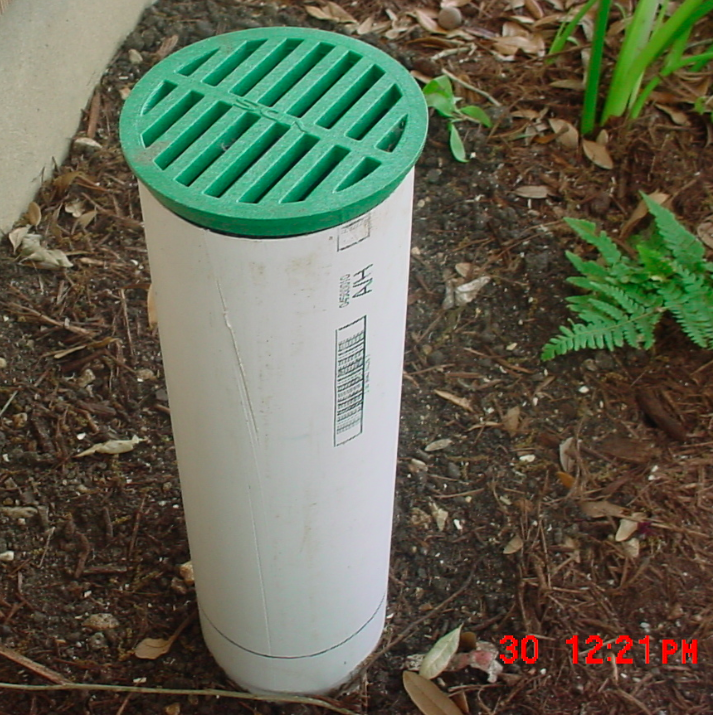
Brian in San Antonio was kind enough to share some pictures of his worm tubes that he placed under the eves of his home and buried about 18″.  He drilled several holes in the  bottom 18″ buried portion of the pipe for drainage.

I just wanted to thank you for your help and encouragement starting worm composting. I went ahead and mixed 50-50 cow manure and peat moss in my tube and added a hand full of your red worms, and built a two bin system for the rest of the worms. two worm I added to my potted pineapple plant as an experiment. I figured I’d let the worms settle in for 3-7 days before adding vegetable mater. take a look at my pictures   and let me know what you think. thanks again brother. BRIAN

Here are some more pics of his two bin system.

Above: drainage bin to catch excess moisture from worm composting bin.

Thanks to Brian in San Antonio for sharing your pics and ideas.

Let us know if you have any questions about composting w/ worms.  Red Worms, European Nightcrawlers, and Alabama Jumpers available at TexasRedWorms.com for composting, gardening, and fishing. For more tips on what to do when you receive your worms check out our Care of Worms section.

Make your own worm pit.

25 Mar

Due to a lack of morning or afternoon sun, I had a difficult time growing anything in this flower bed.  What began about three years ago as a compost pile would be converted into a worm pit.

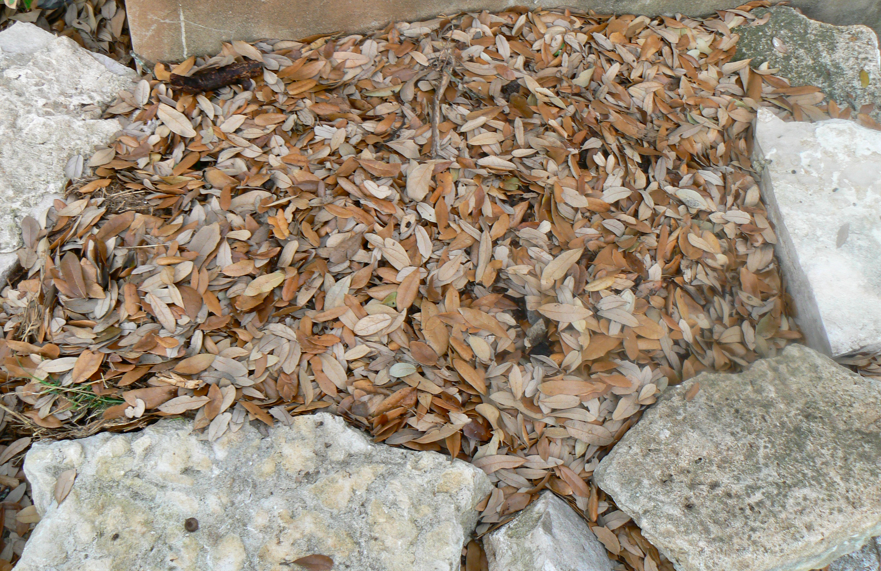
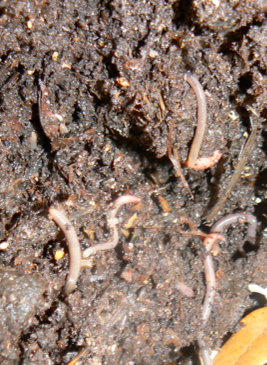
First, I dug out some of the existing soil that was mostly clay and caliche (rock).  I dug out about 18″ and began filling w/ organic matter.  I began adding coffee grounds, horse and cow manure, grass clippings, leaves, and other vegetable waste.  I didn’t add worms until about this time last year.  Adding the worms at this point,  gave the organic matter plenty of time to break down, and provide a rich environment for the worms.  The worms have flourished and every handful yields a good many worms.  I have continued to add compost material, and water as needed to keep the bed moist.  Over the last month or so, the live oaks have given us a ton of leaves, and I have added them to the top layer as a mulch.   You can use newspaper, hay, or other kinds of mulch to keep the worm bed from drying out.  A layer of mulch will also keep the worms cool in the summer and warm in the winter.  This particular worm pit I am raising Alabama Jumpers, but is suitable for other species, red worms, European nightcrawlers, and African nightcrawlers.

Harvesting Worm Castings w/ a Homemade Sifter

23 Mar

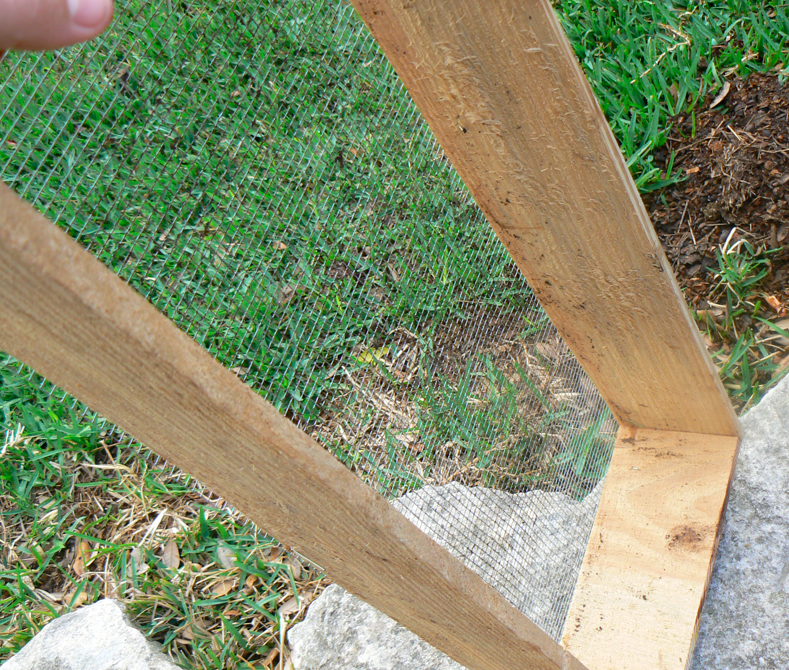
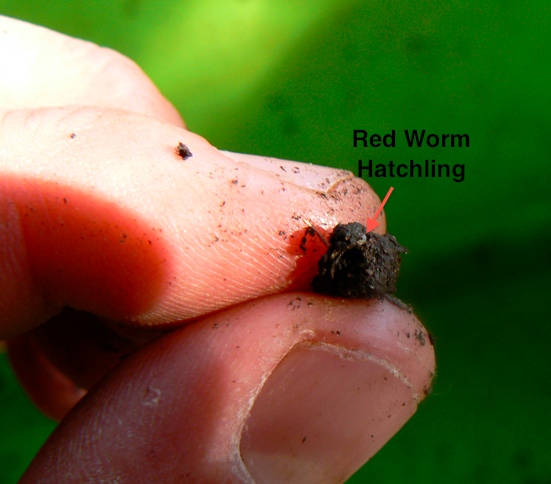
For large jobs of sifting worms from castings or compost I use my Texas Worm Harvester, but for smaller jobs I have built a small box sifter.  With some scrap materials,  and the left over 1/4 inch wire mesh I had I put together this sifter.  I have also seen where other worm farmers use 1/8 inch screen, for my use I have found the 1/4 inch to do just fine.  Separating worms from castings using this or the harvester method is the first step I take and removes most of the worms are course unprocessed organic matter.  I do spend time picking out tiny worms and eggs, but losing a few is not a big deal.  Here is a picture of a tiny hatchling that I found while harvesting castings.  As you can see, or maybe not, these little guys are hard to find.  This little thread of a worm was wiggling which made him easier to see.

Compost Tea Time

18 Mar

This afternoon I began brewing up about 70 gallons of compost tea with worm castings I recently harvested.  In about 12 hours my brew will be ready to apply to my plants and yard.  If you are in the San Antonio area, and can pick up, I’ll be giving a gallon of actively aerated vermicompost tea away with a TexasRedWorm.com purchase.  An application of compost tea will add life to your soil with beneficial micro organisms that will fight disease and pests, as well as, boost your plants growth.  Active aeration prevents harmful anaerobic bacteria and other non-beneficial microbial activity.  Applying compost tea within a few hours is best, after a few hours the brew begins to go anearobic.

Here’s a link for a recipe.

Be aware of store bought compost tea products claims that are sitting on the shelf.  These products will not be aerobic and will not contain many of the benefits (beneficial microbes that require Oxygen) that are associated with actively aerated compost tea.

Texas Worm Harvester (part 4)

10 Mar

After several weeks and hundreds of pounds, I have made a few modifications to my worm harvester.  The first thing I did was replace the 1/2 inch hardware cloth w/ 1/4 inch screen throughout.  The 1/4 inch screen keeps the majority of the worms out of the catch tubs and sends most worms to the end bucket along w/ the larger sized material.  I still have to spend some time picking through the worm castings for eggs and baby worms.  Using this method I have been able to speed up the process of separating worms from castings considerably.

Another change I made was adding a scrap piece of particle board to the front end to make loading easier and to prevent back flow.  The only other modification was to tweak the angle slightly.  I have the end pieces bolted so that I can adjust the height, also I can add blocks underneath to change the level.

Cold Hardiness of Worms

21 Feb

WIth temperatures dipping into the mid-20’s and a wind chill well below, I transported several pounds of red worms and european nightcrawlers in the back of a pick up from San Antonio through Houston to southeast Texas.  I knew it was going to get cold, but the forecast for San Antonio was way off.  When planning our trip, the most recent weather reports called for morning temperatures in the mid-50’s.  Thank God for the cold hardiness of these worms.  We finally reached our destination and the 6 hours the worms spent in small bins exposed to these temperatures I feared I would have lost many of the worms.  Temps. in bins dipped well below freezing.

Fortunately, both species (europeans and red wigglers) recovered just fine.  Even the smaller juvenile worms were actively working the next day, as I checked the bins and got them to 50F.

God bless these little guys who prove over and over their resilience in some less than ideal conditions.  I don’t recommend testing the limits, as I typically keep them fairly protected (indoors when possible, the garage, and worm beds several inches underground).