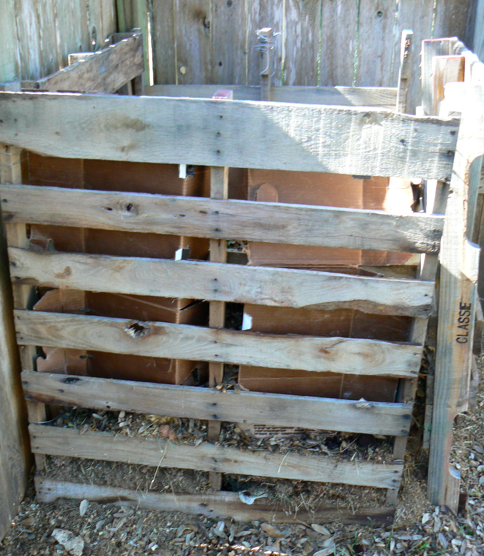
Check out this link to see how to make a compost bin out of pallets. Pallets can usually be acquired for free and make a great bin for breaking down your organic matter before feeding your worms or your plants.
Check out this link to see how to make a compost bin out of pallets. Pallets can usually be acquired for free and make a great bin for breaking down your organic matter before feeding your worms or your plants.
We’ll be talking about how to get started composting with Red Worms and how to keep warm!

Red Mites killing a red worm

Red mites on watermelon rind.
I’ve encountered these red devils before but not at this level. Unlike most visitors in your worm bin, these guys are parasites to worms. (see top picture). Red mites flourish and can become a problem in a bin that is too moist, has too much food, or too acidic. Don’t panic if you have a few mites, but a bin that is has been neglected and unkept in these conditions can pose a problem. My outbreak was caused by overfeeding before we headed out for our July 4th vacation, and was left to fester for more than a week. Getting rid of a red mite infestation can be a challenge.
I’ve tried several methods and have shown below a little experiment I began today. I scraped the top of some red mite infected bins and partially filled some small shoebox containers. From Left to Right in pic below 1. control 2. diatomaceous earth 3. watermelon rind 4. agricultural lime.
1. The control bin will be left open and scraped from time to time to see how long it takes to get rid of the red mites.
2. Diatomaceous Earth has been applied to top of #2. DE needs to be kept dry in order for it to stick to bugs and make tiny cuts that will dry them out and kill them off.
3. Watermelon rind placed on top to attract red mites and discard. I will replace with a new one and repeat and see how this does.
4. Ag Lime dusted on top. Ag lime is alkaline and will hopefully bring the acidic bedding closer to neutral. The high alkalinity concentrated on the top should burn up the red mites and not harm the worms.

4 methods for getting rid of red mites
These methods have been used before and should all work. I just kind of wanted to see them head to head. We’ll see how this turns out. The good news is most of the red mites have been dismissed without harming too many of my bins and worms. Additionally, I learned a valuable lesson about overfeeding, and next time I’ll use more composted manure and less of my worm chow mix. My mistakes were 1. overfeeding 2. too wet 3. too much peat moss and too little composted manure (which made my bedding a little acidic) 4. My infected bins were unattended for a week. Had I caught them sooner it wouldn’t have been much of an issue.
The Spring Fever Festival is Saturday March 23, 2013 at 33 Herff Road, Boerne TX 78006. Kyle from Texas Red Worms will be speaking at 11 a.m. I will be presenting basics of worm composting and answering questions on worm farming. I look forward to seeing you there.
Upcoming events include an April 16th appearance in San Antonio with Green Spaces Alliance. Stay tuned for more details.
This weekend or while supplies last. Every worm farm purchase from Texas Red Worms comes with 4 lb bag of worm castings. For pick up and local orders only. First come first serve.
Happy Mother’s Day!

I have tried several models of flow through systems and continue to tinker to get the results I’m looking for. The idea is for the finished castings to fall through the grate at the bottom of the bin and the worms to work towards the top of the bin.
Materials: square metal tubing, plywood, braided cable, 1.5″ self tapping metal screws, small I beam we found for the base bar to mount winches, and 2 winches (one we salvaged and another from Tractor Supply @$20) for pulling each direction.

We welded a bar to slide along the bottom of the bin to agitate the castings through the grate. I have tried other versions without the cutting bar, and castings tend to get clumpy and stuck. Stay tuned for the big reveal when we add worms and a few finishing touches.


Sorry for the delay on returning phone calls, we are in Beijing adopting our second daughter. I have access to email, and will do my best to reply quickly KyleHarrell@hotmail.com . For more on our adventure PlansforHope.blogspot.com
Due to a lack of morning or afternoon sun, I had a difficult time growing anything in this flower bed. What began about three years ago as a compost pile would be converted into a worm pit.
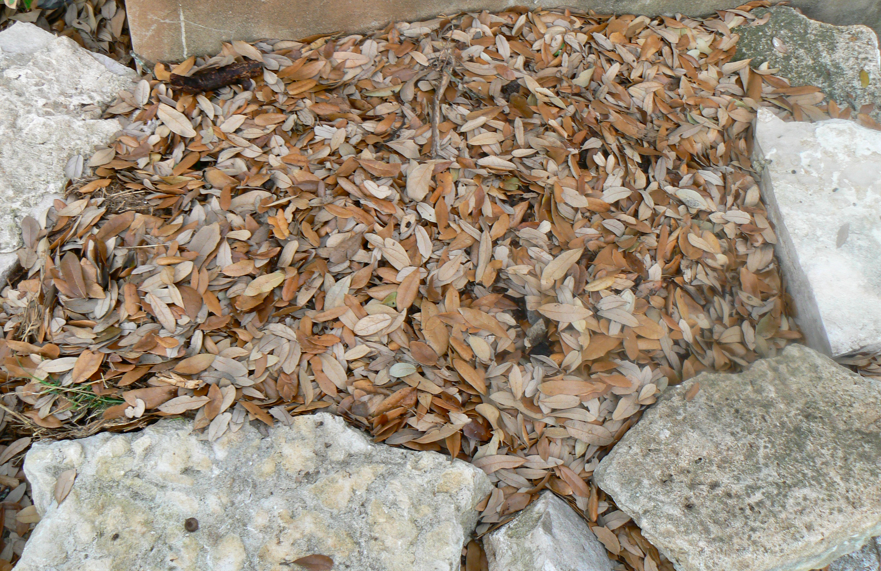
First, I dug out some of the existing soil that was mostly clay and caliche (rock). I dug out about 18″ and began filling w/ organic matter. I began adding coffee grounds, horse and cow manure, grass clippings, leaves, and other vegetable waste. I didn’t add worms until about this time last year. Adding the worms at this point, gave the organic matter plenty of time to break down, and provide a rich environment for the worms. The worms have flourished and every handful yields a good many worms. I have continued to add compost material, and water as needed to keep the bed moist. Over the last month or so, the live oaks have given us a ton of leaves, and I have added them to the top layer as a mulch. You can use newspaper, hay, or other kinds of mulch to keep the worm bed from drying out. A layer of mulch will also keep the worms cool in the summer and warm in the winter. This particular worm pit I am raising Alabama Jumpers, but is suitable for other species, red worms, European nightcrawlers, and African nightcrawlers.
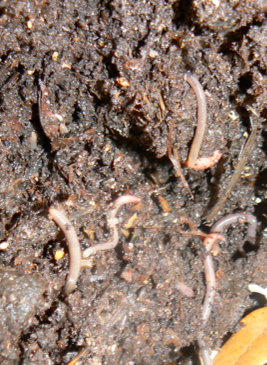
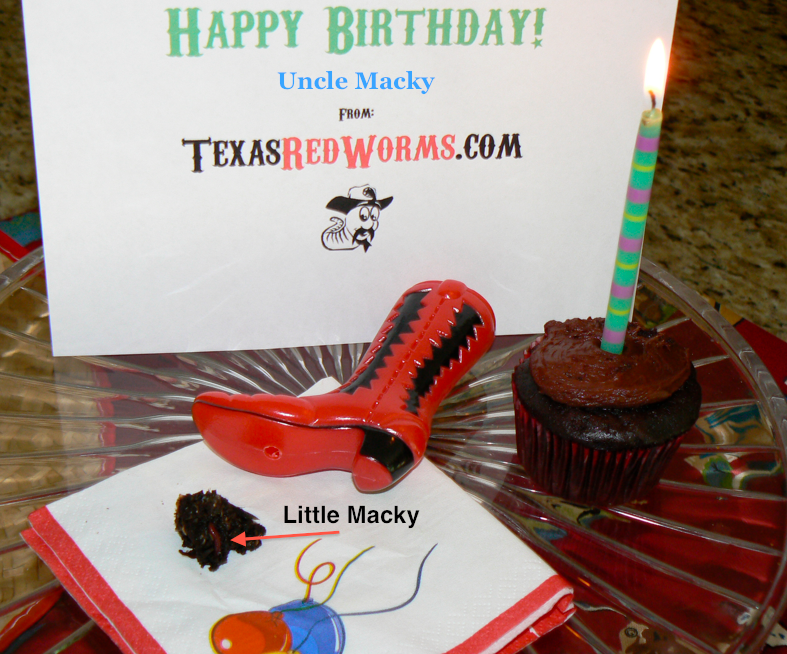
TexasRedWorms.com wishes Marc McClendon “Uncle Macky” a very Happy Birthday! Included a picture of the little red worm we named after the birthday boy. Happy Birthday Marc and “Little Macky”!
In San Antonio, the last week has been pretty chilly for us. Lows below freezing and highs in the 40s- and 50s.
The rain let up Sunday afternoon, and I slipped outside to feed my worms and turn the compost pile.
 Interesting find. I feed my worms a combination of composted horse/cow manure, vegetable scraps, and coffee grounds from my compost bin and piles. Above is a picture of one of my compost bins where I found hundreds of tiny earthworms. Temperatures in a compost pile can reach upwards of 150 F, therefore usually too hot for worms. The freezing temperatures and rain have cooled things down, and have attracted hundreds of earth worms. The moisture and cool air have provided the right conditions to hatch some eggs.
 Earthworms or European night crawlers are what you will find in your yard. They eat and break down organic matter in the ground. Depositing beneficial castings as they burrow through the soil, aerating and fertilizing along the way.
 Texas Jumpers