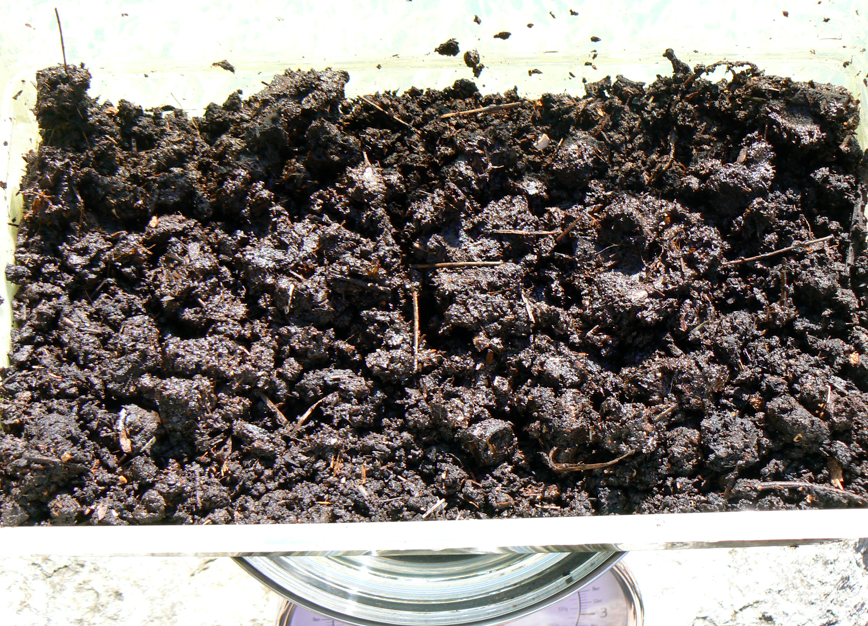
This afternoon I began brewing up about 70 gallons of compost tea with worm castings I recently harvested. In about 12 hours my brew will be ready to apply to my plants and yard. If you are in the San Antonio area, and can pick up, I’ll be giving a gallon of actively aerated vermicompost tea away with a TexasRedWorm.com purchase. An application of compost tea will add life to your soil with beneficial micro organisms that will fight disease and pests, as well as, boost your plants growth. Active aeration prevents harmful anaerobic bacteria and other non-beneficial microbial activity. Applying compost tea within a few hours is best, after a few hours the brew begins to go anearobic.
Be aware of store bought compost tea products claims that are sitting on the shelf. These products will not be aerobic and will not contain many of the benefits (beneficial microbes that require Oxygen) that are associated with actively aerated compost tea.
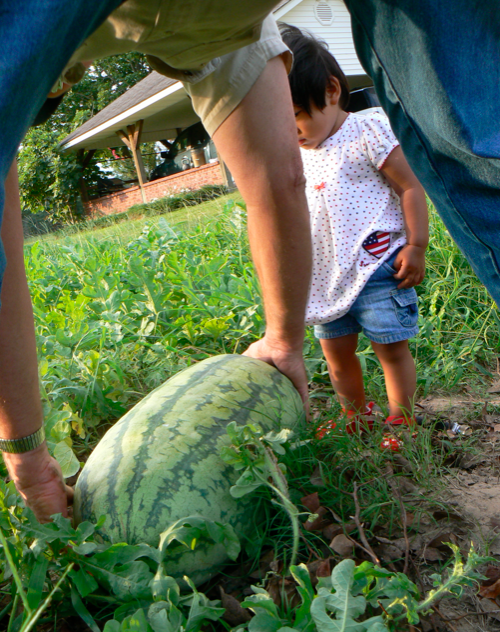
Spring time means it’s time to plant. The whole family pitched in helping my parents with the garden. My niece and dad are pictured above planting the watermelons. I supplied the worm castings, and a little hoeing to help out.
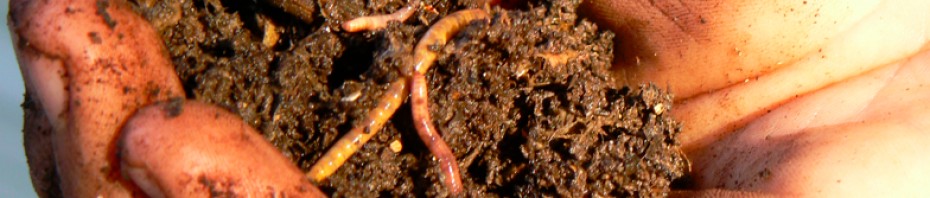
Worm castings are one of the benefits to raising your own worms. Composting food waste with worms will give you your own organic fertilizer. All natural fertilizer that strengthens roots of plants, improve disease resistance, and makes better tasting vegetables. Check out these links for additional information and benefits from gardening with worm castings.
After several weeks and hundreds of pounds, I have made a few modifications to my worm harvester. The first thing I did was replace the 1/2 inch hardware cloth w/ 1/4 inch screen throughout. The 1/4 inch screen keeps the majority of the worms out of the catch tubs and sends most worms to the end bucket along w/ the larger sized material. I still have to spend some time picking through the worm castings for eggs and baby worms. Using this method I have been able to speed up the process of separating worms from castings considerably.
Another change I made was adding a scrap piece of particle board to the front end to make loading easier and to prevent back flow. The only other modification was to tweak the angle slightly. I have the end pieces bolted so that I can adjust the height, also I can add blocks underneath to change the level.
Thanks to Chris from Arkansas who sent in a great video question via email.
My response:
Looks like a great spot to build a worm bed. (Pick a shaded area that can be kept moist, well drained, with decaying organic matter.)
You can do either:
If you bury your plastic bin, be sure the bottom of the tub is either removed or has lots of good sized drainage holes. You could also dump the contents of your plastic bin into the flower bed. For added protection from drying out, and critters you can cover with a few layers of damp newspaper, cardboard, straw, mulch, old carpet, or plywood.
Or you can do both:
Bury your red wiggler bin. Use the rest of the space for European nightcrawlers (Eisenia hortensis), or other species. By building up organic matter you can attract your native earthworms and/or supplement with some purchased worms. You can keep tabs on your red worm population, and watch the locals come to feed. I have done this in a couple of flower beds, and it seems to work well. The red worms will not stray and stay close to the food source. The earthworms (European nightcrawlers) tend to spread out more which is great for surrounding soil. Keeping your bed moist and full of organic matter will attract them and keep a fair amount close to home.
Hope that helps.
Red Worms– (Eisenia foetida) top feeders, composting worms, extremely prolific.
European Nightcrawlers– (Eisenia hortensis) deeper feeders, great for aerating lawn and garden, can also be used for composting.
Both Red worms and European nightcrawlers can be used to reduce household waste, accelerate the composting process, as well as, add nutrient rich natural fertilizer to plants, grass, and garden.
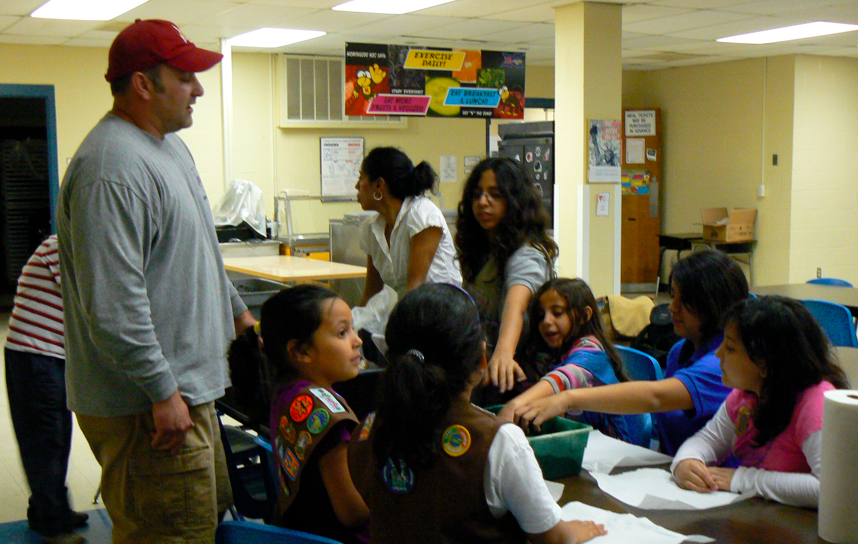
TexasRedWorms.com helped some San Antonio Girl Scouts get started composting with red worms. The girls were very knowledgeable about the composting process, and were quick to get hands on with the worms and castings. These scouts are working on badges, reducing waste, and making their homes and school better with worms.
Thanks to Magda Silva and the Girl Scouts of Southwest Texas!
European Nightcrawlers are now available at TexasRedWorms.com. They can be used for composting just like the red worm, but are a bit larger, stronger and are deeper tunnelers than the top feeding red worm. Red Worms prefer piles of moist decaying organic matter (leaves, manure).
There are many different species of earthworm ranging in size and climate, most can be classified in one of two larger camps. The first being the deeper dwelling tunnelers (European Nightcrawler), and secondly the top feeding composters (Red Worm). A lot of biologists claim that all earthworms have been introduced, from settlers bringing them in potted plants and so forth. I have a hard time with that, but guess it could be possible.
Care for both worms is similar and they can even co-habitate. The nightcrawlers are able to be added directly to your garden, flowerbed, or lawn, while the red worms would not fare so well. The red wigglers are more prolific smaller worm that will not scatter like the European nightcrawler, or Alabama Jumper. Both are well suited for composting and bin raising, and care is identical.
European nightcrawlers are typically what you will find at bait shops, and grow thicker and longer than the red wiggler. Both are active on a hook and will get the fish to bite.
WIth temperatures dipping into the mid-20’s and a wind chill well below, I transported several pounds of red worms and european nightcrawlers in the back of a pick up from San Antonio through Houston to southeast Texas. I knew it was going to get cold, but the forecast for San Antonio was way off. When planning our trip, the most recent weather reports called for morning temperatures in the mid-50’s. Thank God for the cold hardiness of these worms. We finally reached our destination and the 6 hours the worms spent in small bins exposed to these temperatures I feared I would have lost many of the worms. Temps. in bins dipped well below freezing.
Fortunately, both species (europeans and red wigglers) recovered just fine. Even the smaller juvenile worms were actively working the next day, as I checked the bins and got them to 50F.
God bless these little guys who prove over and over their resilience in some less than ideal conditions. I don’t recommend testing the limits, as I typically keep them fairly protected (indoors when possible, the garage, and worm beds several inches underground).
In this avocado I caught this red worm laying an egg. I grabbed the camera a little late, but you can see the worm and egg that was layed. Red Worms are prolific in good conditions. They are hermaphroditic and have both male and female reproductive organs. The worms will exchange fluid and can lay an egg every 7 days. The cocoons or eggs can contain 4-20+ baby worms.
You can save money, reduce waste, and benefit your plants with a red worm farm. It requires very little effort and space. Your TexasRedWorm starter farm can be kept under a sink, in a closet w/ no smell. Just add your coffee grounds, paper/ cardboard waste, fruit and vegetable scraps, and let the worms do the work. They will turn your trash into a rich natural fertilizer that you can add directly to your lawn or plants.
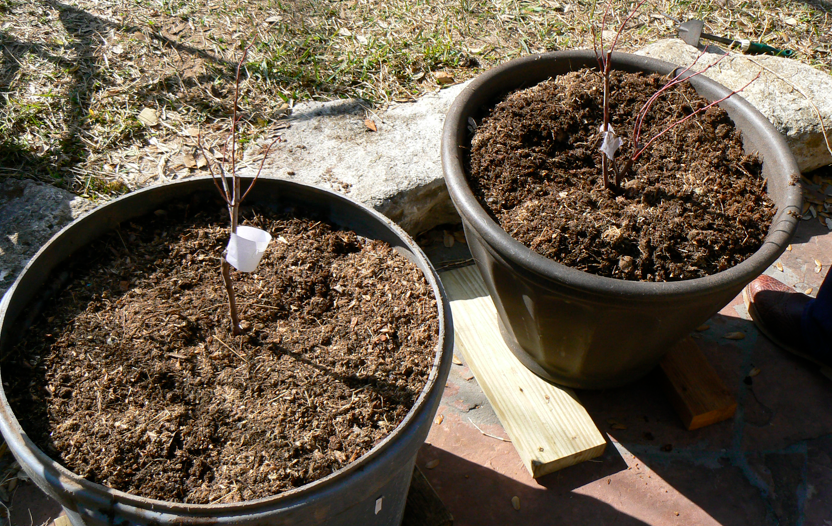
I just received my blueberry shipment yesterday, and was anxious to plant. I ordered 14 blueberry 2-3 foot tall plants (climax, premier, brightwell, and delight varieties). Blueberries like a little acidity and do very well in the southeast Texas well drained sandy soil. We will put most of the plants in the ground in Livingston, but I wanted to have a couple here in San Antonio in pots.
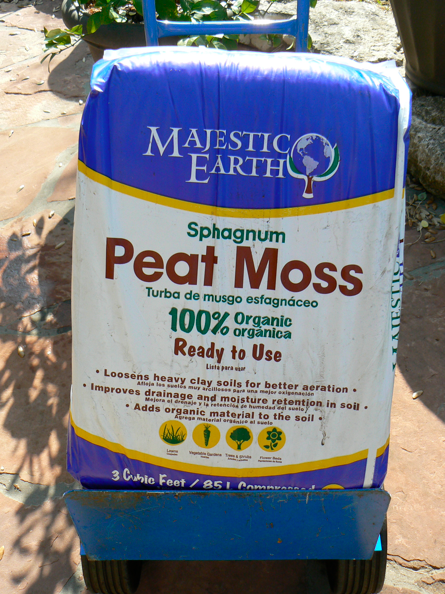
My blueberry potting mix: Sandy southeast Texas soil, peat moss, worm castings, and finished compost.
For the two plants I split 4 lbs of Texas red worm castings that I placed near the roots, not mixed like the other components. Worm castings are an outstanding fertilizer to support root growth and development.
These plants should produce a few berries early this Summer, but we will pick them early to yeild a better crop in the second year.
I chose a large container, and repurposed an empty syrup tub that we use to feed cows.
The San Antonio Botanical Garden will be hosting several workshops this Spring through NEISD Community Education for kids and adults. 2011 Spring Calendar
The Botanical Garden is a great place to take the kids for a fun and learning. My mother in law loves the Texas Native Trail.
Texas Native Trail
The Native Texas Trail is a unique aspect of the San Antonio Botanical Garden. This area consists of plant communities characteristic of the Hill Country (Edwards Plateau), East Texas Piney Woods, and South Texas. These three distinctive and diverse ecological regions of Texas vary in soil, plant life, topography, and weather. The authentic botanical setting is enhanced by several early Texas houses, which have been reconstructed on the site to help illustrate and interpret the regional theme.
This week we provided Texas Jumpers and set up bins at the Houston Zoo. There is no shortage of worm food and the kids visiting will soon get to see some Texas Red Worms “Texas Jumpers” up close. With the Houston heat, we decided Texas Jumpers would be the best choice for their location and […]
For a several days I had noticed my rugs pulled back and could tell some critter was rooting around in my worm beds. To figure out just what we were dealing with, my daughter and I set up our game cam to catch the rascal in the act. It was not a huge surprise after […]
Oh the good ‘ol days when a couple of dimes would get you something. Unfortunately we can’t give you this deal, but we’ve got some great Jumpers, Euros, and Red worms available for your fishing trip or enhancing your soil. Thanks to Uncle Corky and Sheryl for sending this great picture they found.
Here’s another example of a raised bed for worms. It’s next to the house and gets full shade. It’s next to a spicket for easy access to water and/or drip irrigation. I used some landscaping blocks to construct the borders and filled it with compost. After adding a Tx Jumper Starter, I cut a piece […]







 Texas Jumpers