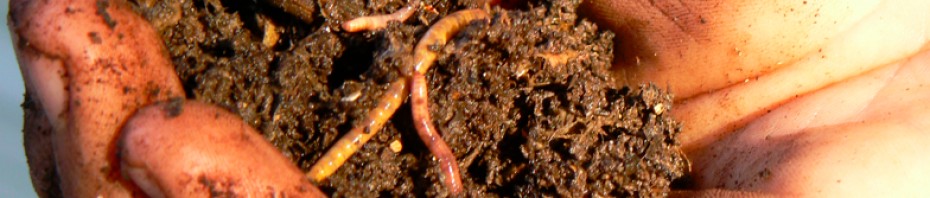
It’s January in Texas and temperatures are right for red worm cocoons to hatch. Temperatures will dip just below freezing at night on occasion, but right now it’s 60F. Red worms will do fine from 40F-80F. Mine are kept at a pretty constant 60F this time of year, and they are doing wonderful. I snapped this picture early this morning as I peeked under the lid of one of my starter farms.
Tis’ the Season for RedWorms
2 DecDecember in South Texas brings Christmas time and with it some welcomed cooler temperatures ideal for red worm farming. My red worms are loving this time of year, and are producing cocoons and castings like never before.
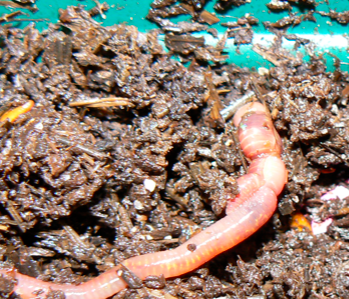
When harvesting castings or worms I have seen more “love knots” and cocoons than ever. The picture above is of two red wigglers exchanging seminal fluid. In ideal conditions red worms can produce a cocoon or egg sac every 7 days. Each egg sac (depending on conditions) can hatch 4-20+ tiny red worms.
In this season of giving you can give a responsible gift that benefits everyone. A red worm farm can compost those gift boxes, paper, and food wastet. Vermicompost (worm manure) or castings that will nourish plants and soil and keep waste out of the landfill. For families with little ones, red worms make a great learning gift that can teach kids responsibility and how to be good stewards of their environment.
Merry Christmas! from TexasRedWorms.com
Perfect time for Red Worming (Vermicomposting)
12 NovIt’s always the right time to add compost to your soil, and always a great time to get started composting with Red Worms. It’s Fall in Texas and the cooler weather is ideal for work outside and setting up your worm bed.
TexasRedWorms.com provides you the easiest way to start composting with Red Worms (vermicomposting) today. Our shoebox sized Starter Farm provides everything you need to produce nutrient rich castings for your plants and soil, and a thriving breeding brood of red worms (eisenia foetida) nature’s best composter.
Check out our latest ad on Craigslist or just give us a call 210-310-5046. If you are in the San Antonio or Livingston, TX area pick up can be arranged, or call for shipping information.
What to do w/ your Pumpkins after the Trick or Treating
2 Nov
The candy is gone and the festivities are over. Instead of throwing those pumpkins out with the trash, add them to your compost pile or feed them to your red wigglers. Composting and worm farming is fun for the whole family. It is rewarding watching your food waste turn into dark and rich finished compost. I just added some worm castings to my lemon trees, and am on the hunt for sad jack-o-lanterns around the neighborhood.
Compost tea benefits: Get rid of termites, fleas, ticks, chiggers, and more naturally.
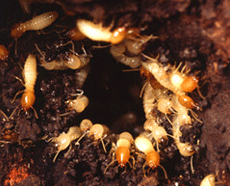
10 OctThis weekend I took a visit to East Texas to work on some of our worm beds. While loading manure from some piles to start a new worm bed, I noticed some termites in some fence posts, as well as, some fire ant mounds. I have had success with compost tea applications before in controlling ants, grubs, and fleas. So I started a small batch of tea with finished compost and some redworm castings. I also did a little research to see if anyone had had any experience with termites and found this article. Microbes like nematodes and bacteria can be amplified with a quality finished compost and brewed into actively aerated compost tea. Beneficial predators that can control and eliminate many pests. So if you have a roach, ant, flea, tick, grub, cigger, termite or other problem chances are actively aerated compost tea can come to the rescue.
Compost “Sweet” Tea
1 OctI started brewing a batch yesterday afternoon of actively aerated red worm compost tea (red worm castings, unsulphured molasses, and rain water).
I have collected about 15-20 gallons of rain water to use over the last month or so. Rain water, well water, or water from other natural sources are the best choices to be used in your compost tea. Tap water should be left out in the sun for a day or so to eliminate Chlorine. Next, I harvested some castings from my worms. I use a mesh laundry bag for my tea bag. Compost can be added to the water or steeped with a bag. The tea bag eliminates the need to strain before putting in your sprayer.
Aeration- I’ve got a pond aerator pumping into the brew to supply plenty of O2 supporting beneficial microbial growth.

To make is “sweet” compost tea, I’ve added some unsulphured molasses to feed the beneficial bacteria.
This batch will be ready this afternoon. I’ll put the finished product into a pump sprayer and apply to my plants. It’s that easy to add beneficial microbes and add “life” to plants and soil. Compost tea applications will reduce water consumption by plants, and add balance back to your yard and plants. Beneficial microbes (bacteria, protozoa, fungi, and nematodes) can eliminate the need to aerate your lawn, the use of pesticides, and commercial fertilizer.
I will need about 5 gallons or a third for my use, and will be glad to share the rest. I’ll be giving a gallon away with any worm purchase this weekend. First come first serve.
Compost tea results
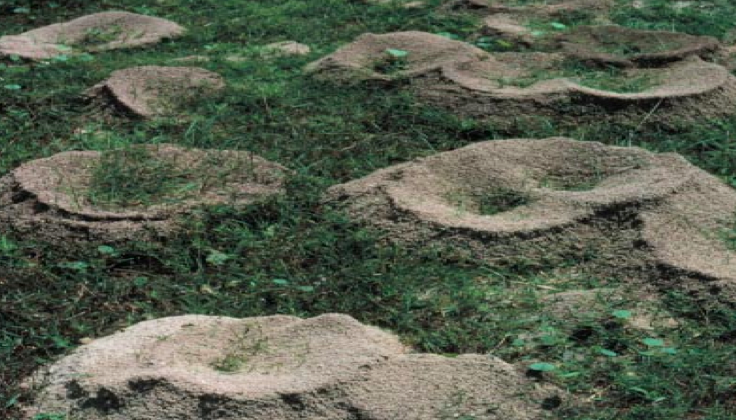
16 AugI had mentioned in my previous post that positive indicator for my compost tea application was to rid a section of our hay patch of ants. The spot of concern has been infested for a few years with “town ants” or Texas leaf cutter ants. Town ant hills were sprinkled throughout a 20 yard X 20 yard area. The operative word being “were” because two weeks later the ant hills are vacant.
Beneficial microbes in compost tea are parasites to ants, fire ants, fleas, ticks, and chiggers. I had had success in my lawn in getting rid of some of these pests with compost tea, but never on this scale. This alone is encouragement enough for us to continue compost tea applications, and we’re looking forward to the next batch.
Compost Tea Party part 3
11 AugWe ended up with two batches. In both we used @80 lbs of finished compost (40lbs in each of 2 mesh laundry bags that we purchased for $1.87 at Wal-Mart). Both batches we used 500 gallons of well water, and aerated with our 1600 gallon rated Aquascape 4 pond aerator. Where we tinkered a little was on the food source (molasses + brown sugar) and brewing time. 1st batch we used two jars of unsulphured molasses and 1 lb of brown sugar and 24 hours of brewing time. The color was light brown and the smell was pretty much neutral with a hint of earthiness to it. Batch #2 was brewed for 36 hours and was fed 4 jars of molasses and 1 lb of brown sugar. The smell on batch #2 was the same faint earthy tone with a hint of sweetness from the molasses. The color was a shade darker brown than batch #1.
One thing we will be judging the success of the compost tea application on is in the reduction of ant hills. We don’t have a big fire ant problem, but one hay patch has several ant hills in an area. Adding beneficial microbes began for me as a way to control fire ants, grubs, and other pests in my yard, and have had some terrific results. We’ll keep you posted.
500 gallon Compost Tea Party part 2
27 Jul
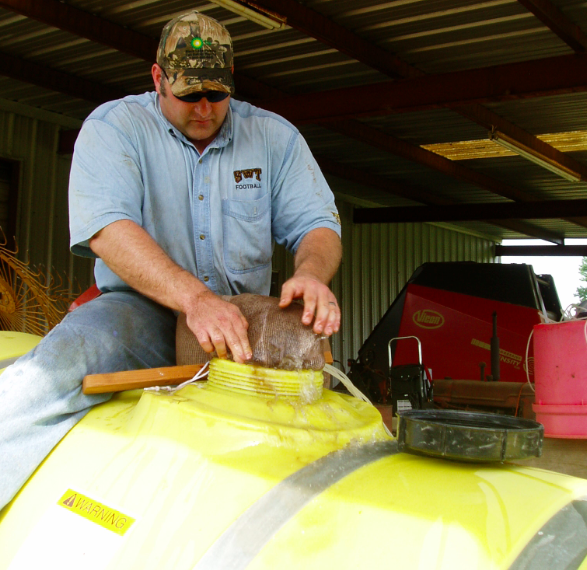
Let the Compost Tea Party begin. The holes in our mesh bags were too large, and we were concerned that our sprayer might get clogged. We grabbed some old panty hose and stuffed our bags into them.
We brewed up our first batch for about 24 hours. It had a nice weak tea color and had a hint of earthy smell. (I pulled out my old Sears microscope that I got for Christmas in ’85, but figured X600 would not be quite powerful enough to see any microbes.) The first batch went well and was applied at a rate of 15 gallons per acre.
The next batch that is brewing right now. This batch will brew for 36 hours.
500 gallon Worm Compost Tea Party
18 JulBrewing a 5 gallon batch of compost tea is no trouble. In a couple of weeks I will kick it up a notch and be brewing up 500 gallons at a time.
We purchased a 500 gallon spray rig from Rozell Sprayer Manufacturing Co. in Tyler, TX this Spring.
In order to add beneficial microbes to our hay fields and pasture, I’m going to replace the water soluble fertilizer with compost tea. I don’t have enough compost to spread over 100+ acres, so compost tea is the solution.
I just ordered my aquascape 4-stone pond aerator today, and this is what I will use to aerate my tea to ensure it stays aerobic. Most of the beneficial bacteria are aerobic and will need plenty of O2.
To keep the ratio of finished compost to water the same as a 5 gallon brew (1 lb. -1.5 lbs. per 5 gallon) I am going to need 100 -150 lbs. of compost and some larger mesh bags. I am planning on using onion sacks for my tea bags.
Stay tuned for more information on TexasRedWorms.com “Big Time- 500 gallon Worm Compost Tea Party”